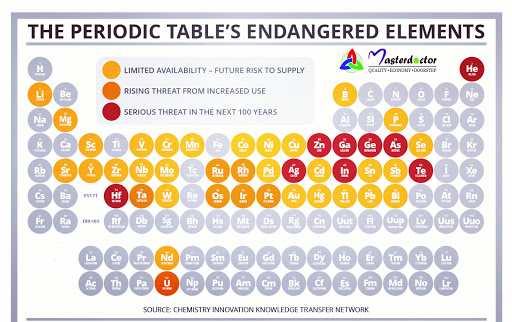
The first National Periodic Table Day was founded on February 7, 2016. The day serves to promote…
The first National Periodic Table Day was founded on February 7, 2016. The day serves to promote the challenges overcome to develop the modern periodic table. Mr. David T. Steineker, #author, #inventor, and #chemistry #teacher at Jefferson County Public Schools in Kentucky is inspired by those challenges. He took the initiative to celebrate National Periodic Table Day based upon John Newlands’ first table of the elements published on February 7, 1863. National Periodic Table Day recognizes the publication of the first table of elements and how it has changed over the years. To understand the development of the periodic table, we first must understand the discovery of elements and their effect on science. Ancient man knew of few elements. By the 1st century A.D., mankind knew about the elements of #gold, #silver, #copper, #iron, #lead, #tin, #mercury, #sulfur, and #carbon. Over time, we added #arsenic, #antimony, #phosphorus, and #zinc to our discoveries. By 1809, there were 47 discovered elements. Johann Döbereiner made one of the earliest attempts to organize the elements in 1817. He organized elements into groups of three, or #triads, based on similar qualities.